Mooncast IPTV positions itself as a mid-range streaming solution for people who ditched cable but got burned by cheaper alternatives. If you’re a sports-first household, someone running multiple screens simultaneously, or a cord-cutter seeking stability over bargain pricing, this review is written specifically for you.
Understanding Mooncast IPTV
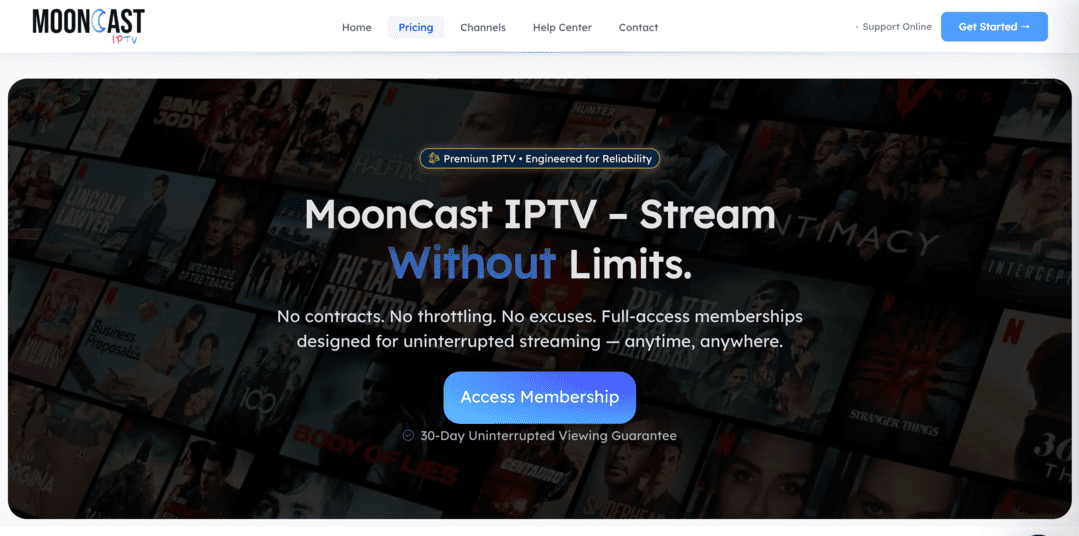
Mooncast IPTV is an internet-based television service that delivers live channels and on-demand content directly through your broadband connection—no satellite dish, no cable box, no technician appointment needed. The service is designed specifically for households with solid broadband and a preference for content delivered across whatever device is closest when you want to watch.
The company positions itself in the mid-range IPTV market, targeting people who want a serious cable replacement rather than a bare-bones budget stream. It’s less like Netflix—which is purely on-demand—and more like a cable package that exists entirely inside your internet connection. The pitch is straightforward: stable performance, broad content access, no locked-in contracts. That’s a compelling combination in a market where most services fail at at least one of those three things.
Mooncast targets sports enthusiasts and households with diverse viewing habits—people who need reliability as much as they need availability. The company appears focused on retention rather than acquisition, which shows in decisions like 24/7 human support and transparent pricing with no hidden fees.
Setup and Daily Experience
Signing up is straightforward: select your plan, complete payment through an encrypted checkout, and you’ll receive a device-specific configuration guide by email. This personalized setup approach is genuinely thoughtful compared to services that just send generic instructions and hope you figure it out. Initial configuration requires following steps on your specific device rather than a simple app download—budget fifteen to twenty minutes your first time rather than expecting instant access.
The interface itself is clean and navigable, even for someone who isn’t particularly tech-comfortable. The dashboard doesn’t bury content behind excessive menus or require you to speak IPTV terminology to find what you’re looking for. Supported devices include Smart TVs, Firestick, Android and iOS mobile apps, tablets, and computers. One practical note: running multiple simultaneous streams across different screens works seamlessly on the higher-tier plans, which matters for multi-device households.
- No contracts or hidden fees—what you see in the pricing table is genuinely what you pay monthly
- Strong live sports performance—server load management specifically targets the exact moments IPTV most commonly fails
- Wide device compatibility—multiple household screens simultaneously without additional hardware costs
- Responsive 24/7 human support—not the industry standard at this price point and meaningfully different from automated competitors
- No free trial—you must commit financially before testing whether the service works with your specific setup
- Channel lineup opacity—complete channel list isn’t visible before purchase, which makes comparison shopping harder than it should be
Three plans cover most household needs, priced aggressively when broken down monthly:
- Access all live channels
- Full on-demand library
- HD streaming quality
- Access all live channels
- Full on-demand library
- HD streaming quality
- Multiple simultaneous streams
- Access all live channels
- Full on-demand library
- HD streaming quality
- Multiple simultaneous streams
The yearly plan is the clear value anchor—under eight dollars monthly for unlimited simultaneous streams is genuinely competitive against any cable alternative. The average American cable bill runs approximately $83 to $100 monthly. Mooncast’s annual plan costs less than a single month of traditional cable. Even the month-to-month plan at $21.99 is a fraction of comparable cable packages.
The three-month plan presents an odd pricing situation: it costs more per month than the six-month option without offering meaningfully more flexibility. If month-to-month flexibility is your priority, the monthly plan makes more logical sense. Mooncast frequently offers promotional pricing, so check the official site before subscribing. The service also includes a 30-day money-back guarantee, which partially addresses the lack of a free trial—you pay first and request a refund within the window, but it does provide a legitimate exit if the service doesn’t work with your setup.
Here’s how Mooncast scores across the five metrics that matter most to everyday streamers:
A 9/10 uptime score translates to real-world reliability: you’re unlikely to find the service down when you sit to watch. That’s the streaming equivalent of your lights reliably turning on—basic but far rarer than it should be in IPTV. The 9/10 stream speed score means fast loads under normal conditions with occasional slowdowns during unusually heavy traffic periods, which is honest and expected for any internet-based service. The perfect support score stands out, suggesting the team genuinely resolves issues rather than just logging tickets. The 9/10 price-to-value score reflects that the annual plan is excellent but the monthly option is less compelling. The 9/10 ease-of-use score means even someone unfamiliar with IPTV terminology can navigate without frustration.
- Sports-first households that need reliable live streaming without anxiety during critical moments
- Multi-device families where different people watch on different screens simultaneously
- Frustrated cord-cutters who tried budget IPTV and got burned by reliability issues
- You’re a casual viewer watching only two to three hours weekly—the annual commitment won’t justify itself
- You need to verify specific channels before purchasing—the lack of channel transparency makes that impossible
How Mooncast Compares in the IPTV Market
Against mid-range IPTV competitors at similar price points, Mooncast distinguishes itself in two specific areas: server stability during live events and human customer support quality. Most competitors in this price range either oversell their performance or handle support through ticket systems that respond in hours rather than minutes. Mooncast’s engineering approach is explicitly designed for the scenarios where IPTV services fail publicly—major sporting events, championship games, pay-per-view fights—and the 24/7 human support means you’re not troubleshooting technical issues alone.
Where Mooncast falls short of category leaders is transparency. Better IPTV services publish complete channel lineups publicly, offer genuine no-payment trials, and provide clear documentation about money-back claims and refund processes. Mooncast asks for trust upfront in ways that stronger competitors have learned to avoid. The 30-day money-back guarantee softens this friction, but the market standard is increasingly shifting toward try-before-you-buy. If you’re comparing Mooncast against services offering free seven-day trials without payment, that’s a material difference worth considering.
The Real-World Picture
Mooncast’s core strength is exactly what the market needs but rarely delivers: a service that prioritizes stability during the moments when reliability matters most. If you’ve experienced the frustration of a stream dropping during the deciding moments of a game you were genuinely invested in, you understand why an IPTV service’s performance during peak demand is everything. Mooncast’s architecture suggests the company understands this viscerally—the server load management and infrastructure investments aren’t marketing theater; they’re engineering decisions that cost money.
The 24/7 human support is similarly practical rather than flashy. When your stream drops five minutes before kickoff, you don’t want to wait for a ticket response or navigate a FAQ that assumes you understand IPTV terminology. Having actual people available immediately is worth the infrastructure cost the company invests in it.
The pricing, especially on the annual plan, is legitimately hard to argue with. You’re paying less monthly than a single month of cable television gets you. That alone makes Mooncast worth serious consideration for anyone who’s been keeping a cable bill out of habit rather than genuine preference. The no-contract structure means you’re not financially trapped if the service doesn’t work for your specific situation.
Final Assessment
Mooncast IPTV genuinely delivers where it matters most—stable live streaming, broad device support, and support staff that actually respond. The annual plan at roughly eight dollars monthly is genuinely hard to argue with compared to any cable alternative. The lack of a free trial and limited channel transparency before purchase are real friction points, but the money-back guarantee means your financial risk is manageable rather than eliminated.
If you’re a sports fan, a multi-screen household, or a frustrated cord-cutter who’s been burned by cheaper services, Mooncast deserves a serious look. Head to the official site, check for current promotional pricing, and use that 30-day window confidently if you decide to try it. The service won’t revolutionize streaming, but it will reliably deliver exactly what you were promised when you decided to cut the cable cord in the first place.